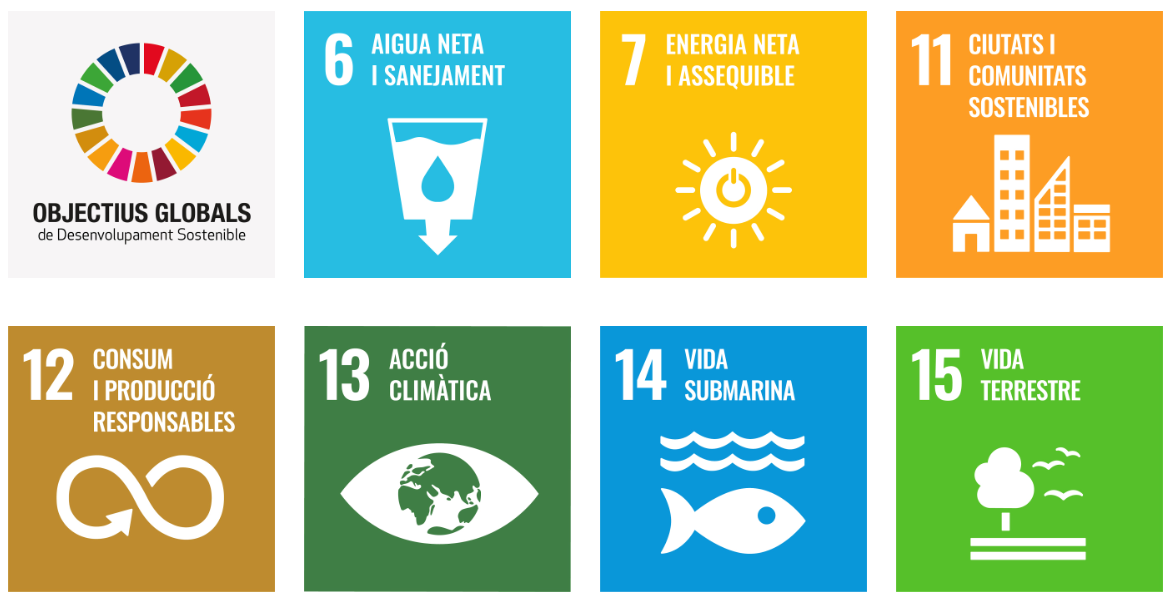
Be part of a collective task. Contribute grains of sand within the possibilities of each one. In 2015, the United Nations presented the Sustainable Development Goals (SDGs) as a universal call to achieve a fairer, healthier and more liveable world. It is a series of items grouped into 17 global goals and set as a reference date in 2030. Unfortunately, time has passed and this situation has not been sufficiently reversed. To make this project more visible, every September 25th we celebrate the World Day of Action for the SDGs , a day that commemorates the adoption of the strategy to achieve the goals before the year 2030. The seed to start fulfilling these global commitments are born of awareness and action. Based on individual awareness, technological and legislative changes will be possible and make these objectives a transversal issue. This interconnection between goals is key. And it is time to assume the responsibility we have, since it is human action that has the greatest impact on the environment. For example, the way we produce and consume resources has a direct impact on our environment, both artificial and natural. Loss of biodiversity, increased carbon emissions and pollution of rivers and oceans are all due to human action. The goals to improve the environment are grouped into several objectives: Clean water and sanitation (SDG. 6), Clean and affordable energy (SDG. 7), Sustainable cities and communities (SDG. 11), Responsible consumption and production (SDG. 12), Climate Action (SDG. 13), Underwater Life (SDG. 14) and Terrestrial Life (SDG. 15). A whole series of aspects in which our decisions and actions in the various areas of life can make things change. But of course the 17 goals are just as important and urgent. The health of the planet and its inhabitants Within care for the environment, one of the challenges is what to do with the waste that is generated in the world. First, it is necessary to understand and accept that the current volume of waste generation is unsustainable. Reversing this situation is planned, to a large extent, in Objective 12, Responsible production and consumption . As the waste hierarchy points out, the priority is to avoid generating waste; the next step is to try to recover the materials.


